
















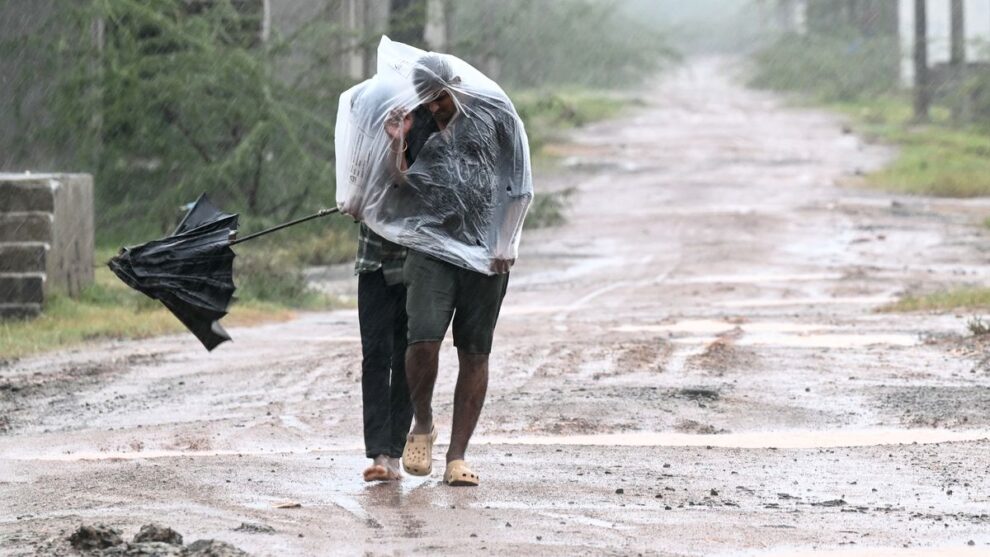
India has been evacuating tens of thousands of people from its eastern coast as cyclone arnab gathered strength and moved toward the shore. The storm had intensified since Monday. It was due to make landfall by Wednesday morning, with more than 12 million people living along its projected path.
Cyclone Arnab Forecast and Landfall
The India Meteorological Department issued warnings for the coastal states of Andhra Pradesh and Odisha. It described cyclone arnab as a “very severe” cyclonic storm. The system was centred about 260 kilometres (160 miles) southeast of Visakhapatnam, the most populous city in Andhra Pradesh.
Forecasters expected the storm to turn northwest and cross the coast by 11:30am local time (06:00 GMT) on Wednesday. Sustained winds of 115 to 125 km/h (71 to 78 mph) were forecast, with gusts of up to 140 km/h (87 mph). The projected track runs inland and then north across India, according to Andhra Pradesh’s disaster management authority.
Evacuations and Rail Disruption
The authority’s managing director, Prakhar Jain, said nearly 50,000 people had been moved to shelters by Monday night. An estimated 400,000 people in the state needed to be evacuated from vulnerable areas, so the operation was far from complete. In Odisha, authorities planned to move 48,000 people out of harm’s way.
Railway authorities said at least 12 trains had been cancelled in eastern India. Services on 53 routes along the southern coast were suspended for Tuesday and Wednesday. These suspensions reduce the risk to passengers and keep tracks clear for emergency movements as cyclone arnab approaches.
Warnings Reach Nepal and the Himalayas
The effects of cyclone arnab may reach beyond the coast. Authorities in neighbouring Nepal advised tourists to stay away from high-altitude areas. They fear the storm could bring heavy rain, snowstorms and avalanches in the Himalayas from Thursday night to Saturday.
The advisory follows a Himalayan flash flood in August that killed about 1,500 people in Nepal. Officials want to avoid a repeat as the weather system moves north. For related global updates and safety reports, readers can visit the world news section for continuous coverage.







Add Comment