















Dubai | A city that welcomed nearly 20 million international visitors in 2025 is navigating one of the most significant periods of travel disruption in its history, as regional instability affects flight operations across the Gulf.
DUBAI — Just weeks ago, Dubai was marking another milestone year. The emirate welcomed 19.59 million international overnight visitors in 2025, a five per cent increase on the previous year, with average hotel occupancy exceeding 80 per cent. December 2025 had been the city’s strongest single month on record. Dubai International Airport was on course to handle 95 million passengers annually, cementing its place as the world’s busiest international hub.
That momentum has been interrupted by an unprecedented period of regional instability, which has led to widespread flight cancellations across the Middle East and prompted thousands of travellers to change their plans.
The UAE government and airport authorities have been working around the clock to manage the situation, maintain operational continuity, and ensure the safety and welfare of all residents and visitors.
The Scale of Travel Disruption
To understand the significance of the current disruption, context is important. In the first two months of 2025, Dubai received an average of approximately 1.9 million visitors per month — roughly 63,000 people arriving every single day. The emirate’s aviation infrastructure, regarded as among the most advanced in the world, was designed to handle exactly these kinds of surges in passenger movement.
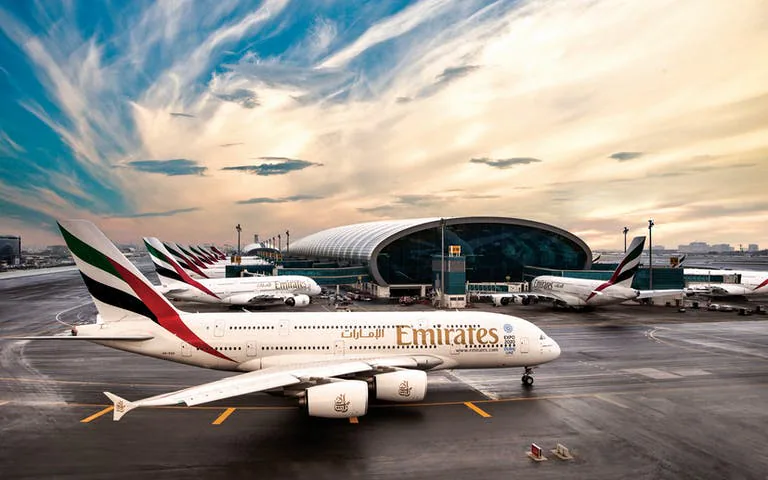
Between March 2 and March 5, over 500 outbound flights departed from Dubai International Airport and Al Maktoum International, facilitating the departure of more than 105,000 travellers to destinations across more than 80 countries. Emirates airline, one of the world’s most respected carriers, worked to maximise capacity on operational routes, reportedly carrying approximately 30,000 outbound passengers in a single day at the height of the disruption.
According to aviation data firm Cirium, more than 11,000 flights across the broader Middle East region have been affected since the start of the month, with the cumulative impact touching approximately one million travellers worldwide. Several international carriers temporarily adjusted their schedules as a precautionary measure, a standard industry response to periods of regional uncertainty.
Governments Coordinate Orderly Returns
Governments across the world worked in close coordination with UAE authorities to facilitate the orderly return of their citizens who wished to travel home.
India, whose nationals represent the single largest expatriate community in the UAE, confirmed the assisted return of more than 52,000 citizens from across the Gulf region during the first week of March. The operation was described by Indian officials as one of the most logistically complex repatriation efforts the country has undertaken in the region, and was carried out with the full cooperation of UAE authorities.
The United States confirmed that more than 32,000 American citizens returned home during the period. The United Kingdom coordinated the departure of more than 138,000 British nationals who sought consular assistance, with alternative routing via Oman used to maintain connectivity during periods of schedule adjustment. European nations including Spain, Italy and Germany similarly provided consular support to their nationals in the region.
Israel worked to facilitate the return of more than 4,000 of its citizens, with special flights operating from Sharjah as part of coordinated arrangements.
In each case, the operations were described by diplomatic sources as having been assisted by UAE cooperation and logistical support — a reflection of the country’s longstanding reputation as a reliable and responsive host nation.
Tourists Supported Through the Disruption
For the more than 20,000 tourists who found themselves unable to travel on their original schedules due to flight adjustments, the UAE authorities moved swiftly to provide support. The government reportedly covered hotel accommodation costs for visitors unable to secure timely flights, a gesture that drew praise from travellers and governments alike, and one consistent with the UAE’s well-established commitment to visitor welfare.
Travellers reported that UAE hospitality standards were maintained throughout the period, with hotels, government service centres and airline ground teams all working to assist those affected.
Aviation Markets and Alternative Routes
The private aviation sector saw a significant surge in demand as travellers sought flexibility during a period of commercial schedule uncertainty. Charter operators repositioned aircraft to regional hubs including Muscat to serve passengers requiring alternative routing, with prices reflecting the exceptional demand during a short and concentrated period.
For the UAE’s large low-income migrant worker community, which includes significant numbers of Indian, Nepali and Pakistani nationals, the disruption has presented particular challenges. Many workers, whose livelihoods depend on continued employment in the UAE, have chosen to remain in the country. Labour advocacy groups have called on employers and relevant authorities to ensure workers are supported during this period, and the UAE’s Ministry of Human Resources has urged all employers to fulfil their obligations to staff.
Dubai’s Resilience and Long-Term Outlook
It is important to place the current disruption in its proper perspective. Dubai has, throughout its modern history, demonstrated a capacity for resilience that few cities in the world can match. The global financial crisis of 2008, the challenges of the Covid-19 pandemic, and successive periods of regional uncertainty have each, in their time, been navigated successfully, and each time, the city has emerged stronger.
The fundamentals that made Dubai one of the world’s most visited cities remain firmly in place. Its infrastructure is world-class. Its governance is stable and efficient. Its position as a global connectivity hub — linking East and West across every sector from finance to logistics to tourism is structural, not circumstantial.
The UAE had set itself ambitious targets under its Dubai Economic Agenda D33 strategy, including a goal of ranking among the world’s top three global tourism destinations. Analysts who track the emirate’s economic performance note that the country has consistently met or exceeded such targets even in challenging conditions.
Regional disruptions of this nature, while significant in the short term, have historically proven temporary. Airlines, insurers and travel operators are already working through their operational adjustments, and the expectation among industry professionals is that normal schedules will resume as the regional situation stabilises.
Dubai’s reputation, built over decades as a place where business is done, connections are made, and people from every corner of the world feel welcome, remains its most enduring asset. It is one that, based on the emirate’s track record, it has every reason to protect and every capacity to restore.
All figures cited in this report are drawn from international media sources, publicly available aviation data, and statements by foreign government authorities. This report does not represent the views of any government or regulatory body.







Add Comment